Playing Longer Costs More Than Betting Bigger — The Session Clock Is Your Real Enemy
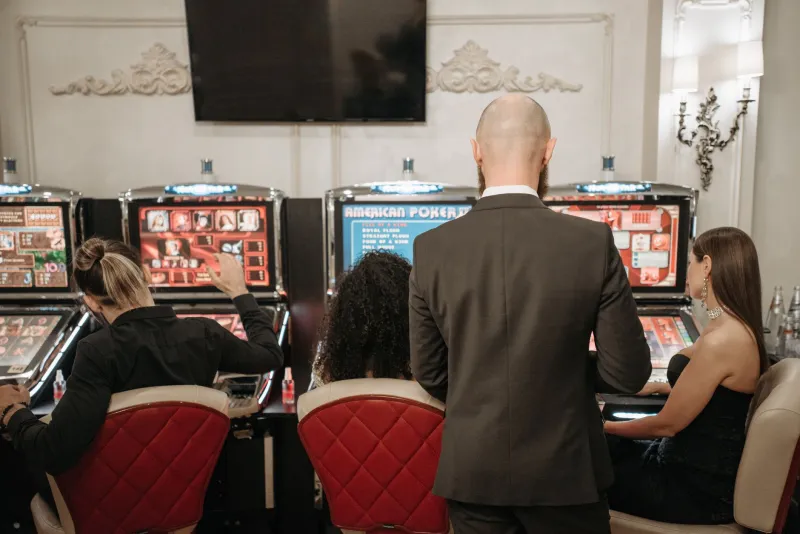
Ask most players what they'd rather do to protect their bankroll — bet $1 per spin for two hours or $5 per spin for 20 minutes — and almost everyone picks the $1 option. Smaller bets feel safer. More conservative. Responsible, even.
But run the actual math and that logic falls apart fast. Time at the casino isn't free. Every minute of play is another opportunity for the house edge to collect, and extending your session can cost you far more than bumping your bet size ever would.
The House Edge Doesn't Sleep
Here's the core concept that makes session length such a big deal: the house edge is a per-bet tax, not a per-session tax. Every single wager you place, regardless of size, gets exposed to that edge.
A slot machine with a 5% house edge (95% RTP) will theoretically take 5 cents out of every dollar you put through it. That sounds manageable. But the key variable most players ignore is how many bets they're placing per hour.
On a typical video slot, you can easily make 400–600 spins per hour. At $1 per spin, you're cycling $400–$600 through the machine every 60 minutes. At 5% house edge, your expected hourly loss is $20–$30. Not dramatic. But let the session run to four hours and you've theoretically handed the house $80–$120 — even though you were "playing it safe" at a buck a spin.
Now flip it. Bet $5 per spin but play for only 20 minutes (roughly 130 spins). You've put $650 through the machine, and your expected loss at 5% is about $32.50 — similar to one hour at $1. Except you're done in 20 minutes and you walked in knowing it.
The math isn't always this clean, and variance means your actual results will differ. But the principle holds: time multiplies exposure.
How to Calculate Your Break-Even Session Length
You can actually figure out a rough "break-even window" for any game you play — the point at which staying longer starts costing you more than you'd expect to recover.
Here's a simple framework:
Step 1: Find the house edge. This is 100% minus the RTP. A game at 96% RTP has a 4% house edge. Most online slots list this in their info panels.
Step 2: Estimate your spins or hands per hour. Slots: ~400–600 per hour. Blackjack: ~60–80 hands per hour. Roulette: ~40–50 spins per hour. Video poker: ~400–500 hands per hour.
Step 3: Multiply your bet size by spins per hour. This gives you your hourly throughput — the total dollars cycled through the game each hour.
Step 4: Apply the house edge. Multiply throughput by the house edge percentage. That's your theoretical hourly loss.
Example: Playing $0.50/spin slots at 500 spins/hour with a 5% house edge:
- Hourly throughput: $250
- Expected hourly loss: $12.50
- After 3 hours: ~$37.50 expected loss
Now compare: $2/spin for 30 minutes (250 spins):
- Throughput: $500
- Expected loss at 5%: $25
Same game, same house edge — the shorter higher-bet session costs less in expected value. And you got the same entertainment experience in a fraction of the time.
Your "break-even session length" is essentially the point where your expected loss in a longer low-stakes session exceeds what you'd lose in a shorter, higher-stakes one. For most casual players betting modest amounts on slots, that crossover happens earlier than you'd think — often around the 90-minute mark.
Why Casual Players Default to Long, Low-Stakes Sessions
This pattern makes psychological sense even if it doesn't make financial sense. Stretching $50 across three hours feels like getting more value out of your entertainment dollar. You're at the casino longer, you're getting more spins, more action, more time in the experience.
The problem is that "more time" is exactly what the house edge feeds on. The casino isn't just offering entertainment — it's offering entertainment while the math works against you. Extending the session extends the math's runway.
There's also a loss-aversion dynamic at play. Smaller bets mean smaller individual losses, which feel less painful in the moment. But death by a thousand paper cuts is still death. The cumulative effect of hundreds of small-edge bets adds up to the same destination — just more slowly, and with more opportunities to chase.
Practical Strategies for Playing Smarter With the Clock
Set a time limit before you sit down. Decide in advance: this is a 45-minute session, period. Use your phone timer if you need to. Once the alarm goes off, you evaluate your position and decide with a clear head whether to cash out or play one defined additional stretch.
Use session length as a bankroll tool. If your entertainment budget for the night is $60, consider whether you want 60 minutes at $1/spin or 20 minutes at $3/spin. Both are legitimate choices — but make it a deliberate calculation, not a default.
Take mandatory breaks. Stepping away from the game for even 10 minutes resets your pace and cuts into the house's hourly advantage. Grab a drink, check your balance, and re-enter with fresh perspective.
Track your throughput, not just your balance. Your wallet balance is a lagging indicator. Knowing how much you've cycled through the game tells you how much mathematical exposure you've actually taken on — and gives you a more honest picture of where you stand.
The Takeaway
Bet size gets all the attention, but session length is the variable that quietly determines how much ground the house edge covers. More time means more bets, more exposure, and more regression toward a losing average.
That doesn't mean you have to rush your casino experience. It means going in with a plan — a real one, with a clock attached. Shorter, intentional sessions with a clear exit point will serve your bankroll better than marathon low-stakes grinding every single time.